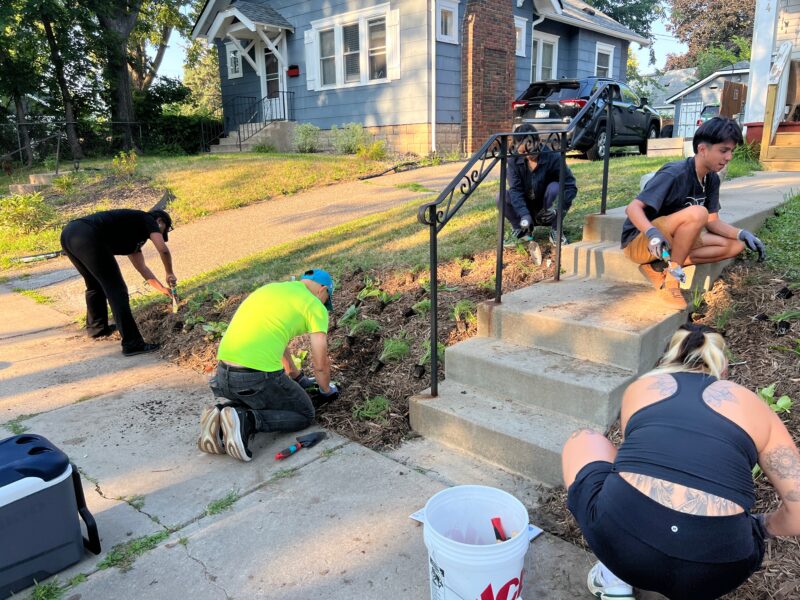
 On a warm evening in early August, a group of people gathered in a circle in Lisa’s North Minneapolis front yard.
They were here to learn how to install a pollinator garden from scratch with the Metro Blooms Community Relations team.
At the beginning of the workshop, participants and staff shared introductions in a circle and shared their favorite animal — Lisa said the butterfly.
“I’ve always been fascinated by butterflies, their process.” Once with her husband she went to a butterfly garden and got to see butterflies in all their different life stages — larvae, cocoon, and full-winged. “It blew me away, the way a butterfly has to die before it gets its wings.”
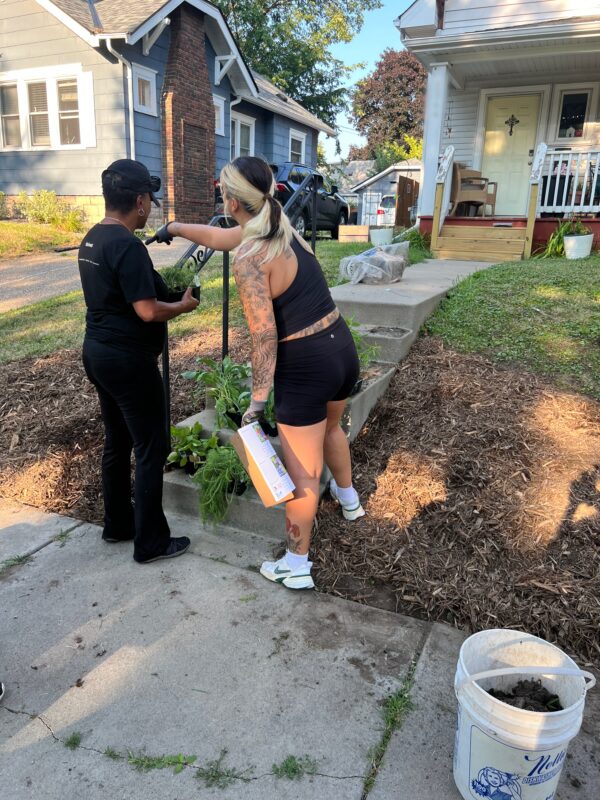
By the end of the evening, everyone helped plant two triangle-shaped garden beds hugging the walkway to Lisa’s front porch, filled with native plants especially preferred by the monarch butterfly.
“It was such an emotional time” Lisa says, recalling planting during the workshop. “The community, the people who came to help, that was a whole different level.”
Making Native Plants More Accessible
Lisa met our Community Relations team at a tabling event this summer. She purchased her first home just a year ago. She filled out a form for a free garden and the team followed up with her.
Thanks to a U.S. Fish and Wildlife Service Small Grant, Metro Blooms was able to provide vouchers for free pollinator gardens and gardening resources to 30 Twin Cities Metro residents in financial need this summer.
We offered the vouchers through Lawns to Legumes, a pollinator habitat grant program that Metro Blooms has managed in partnership with the Minnesota Board of Water and Soil Resources since 2019. Normally, Lawns to Legumes awards garden grants in the form of reimbursements, but our funding through the U.S. Fish and Wildlife Service allowed us to offer upfront support to a limited number of people who would otherwise not be able to afford to participate in the program.
“The program is meaningful to me because Lawns to Legumes is such an amazing program, but it’s not possible for many people to participate because of the reimbursement model—lots of people don’t have $400 extra that they can pay up front for plants and supplies.” shares Erin Bogle, Metro Blooms’ Community Relations Director. “This pilot allowed people to participate in a more accessible way.”
Starting from Scratch
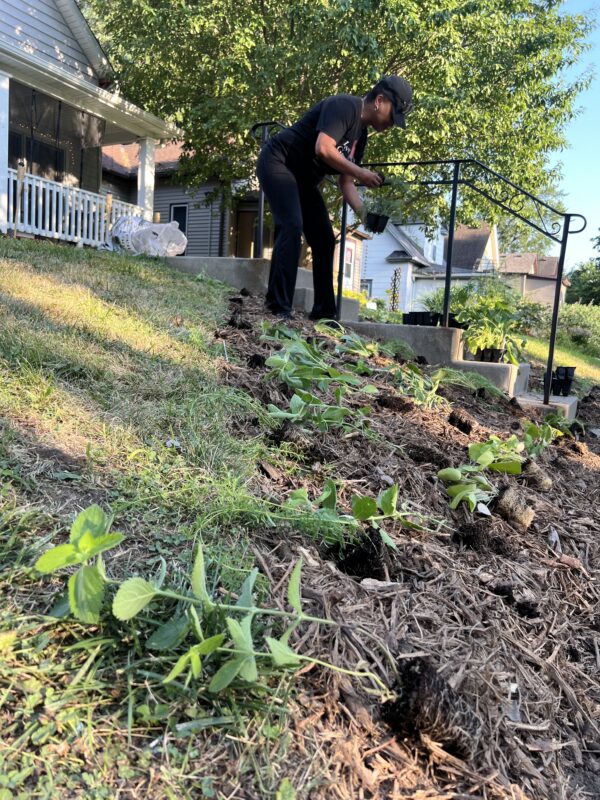 Lisa’s goal had always been to plant a garden. She grew up with her grandma’s garden but since then had always been renting. With becoming a homeowner, that goal was now possible.
Birds started building nests at either end of her front porch, and she loved watching them, glad to know that her home was providing habitat for them. She wanted to extend that support in more areas of her outdoor space. “But I had no idea how to garden,” Lisa shared.
That was not a problem—our team worked individually with voucher recipients to select their plants and purchase gardening supplies they needed. With Metro Blooms’ help, Lisa ordered two native plant kits from MNL that focus on species supporting the monarch butterfly and rusty patched bumble bee.
Other voucher participants then attended the workshop at Lisa’s house to get hands-on practice prepping a site, laying out plants, planting, and garden care basics like watering and weeding. Participants also received a planting and care booklet to take home.
Taking Root Together
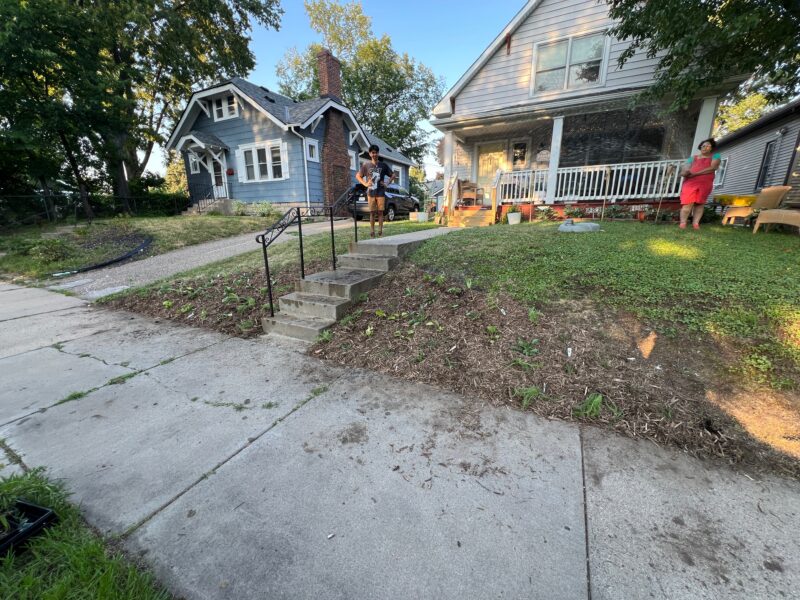
Before the workshop, Manny and Makayla from our Community Relations team figured out where the new gardens would go with Lisa and marked off the area. After learning how to use a manual sod kicker to remove the existing turfgrass, we acquainted ourselves with Lisa’s new plants and laid them out with shorter plants like yarrow and purple prairie clover in the front and taller plants like goldenrod and blazing star in the back.
With everyone working together, before long all the new plants were in the ground.
“I was talking to my plants,” Lisa shares, “You have to talk to the plants, to let them know we’re here and what we’re about to do.”
At the end of the evening, we gathered in a circle again and shared something we learned or observed. Smiles and nods were exchanged as we reflected on favorite plants, digging techniques, and garden dreams. Though we came into the workshop unfamiliar with each other, there was now a palpable sense of comfort and ease across the group.
“To see people willing to help with the process was amazing,” Lisa remarked. “That’s what community should be like—that in spite of differences, we can come together.”
Connecting to Nature and Community
After the workshop, voucher participants picked up their free plants, mulch, and supplies at the Metro Blooms office. Equipped with tools and guidance, residents were now ready to design their own garden at home.
“Our team did lots of coordination to make it as easy as possible for them to plant and get all the supplies they needed,” shares Makayla Freeman, Environmental and Social Justice Manager at Metro Blooms.
“I appreciate the education Metro Blooms brings, the way you teach about native plants and pollinators,” Lisa says, reflecting on how the experience was so much more than getting free plants—it was being invited into a community and getting the support to be confident in gardening and creating pollinator habitat to be enjoyed by both people and wildlife.
Lisa looks forward to seeing the process of the flowers growing and blooming, reflecting on how being with nature helps her navigate grief.
“This really lifted my spirit.”