25 rain gardens, 15 trees, one year. This is what Manny Vazquez, Environmental and Social Justice Manager at Metro Blooms,would make happen with homeowners from the City of Lakes Community Land Trust (CLCLT)—the first time Manny would be leading a project on his own.
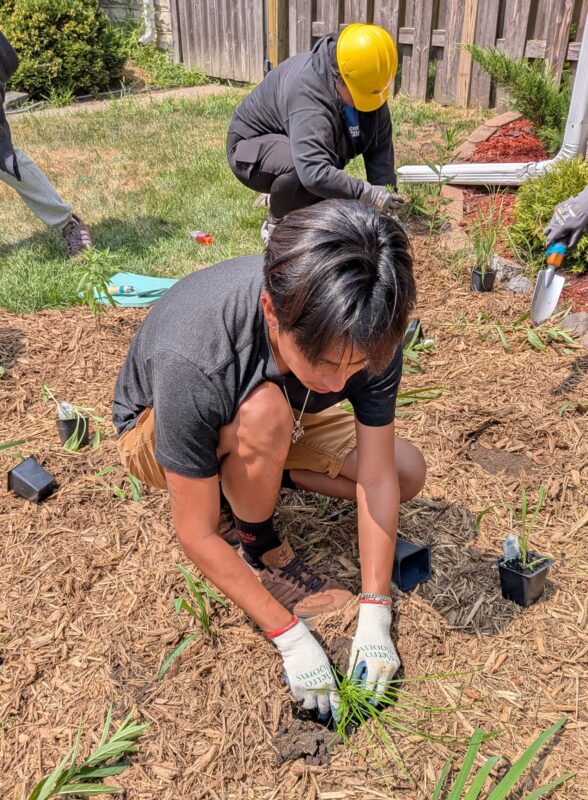
Since last fall, Manny has been coordinating consultations with CLCLT homeowners, talking through ideas for their outdoor spaces and how they hope to use them. Working with the Metro Blooms Design+Build crew and Conservation Corps Minnesota & Iowa members, they’ve brought those ideas to life, creating green spaces that beautify, clean water, and provide habitat in environmental justice and BIPOC communities in Minneapolis.
The plantings, free for residents, were an opportunity to empower homeowners to shape their own yards and the impacts that ripple beyond their property lines. The 25 new rain gardens will slow stormwater and reduce runoff flowing toward Bassett Creek and the Mississippi River. Our modeling estimates they will annually remove 2 pounds of phosphorus, 264 pounds of sediment, and infiltrate over 586,000 gallons of stormwater. The trees planted through this project will further protect water quality by collecting, storing, and absorbing rainfall.
The impact will also be felt close to home. Trees will provide cooling shade and improve air quality, while the native rain garden plants will add vibrancy while supporting pollinators and other wildlife.
A Growing Collaboration
Metro Blooms has been partnering with CLCLT since 2023, when our Community Relations team shared workshops on sustainable gardening and yard care. Funding support for these workshops has been provided by the City of Minneapolis.
CLCLT’s mission is to create community homeownership that preserves affordability and inclusivity. They have made home ownership possible for over 500 low- and moderate-income households, the majority who are BIPOC or women. CLCLT owns the land, and the homeowner owns the building and any improvements made on the land. This set-up helps income-qualified buyers to manage a mortgage more affordably. For many this is their first home, and without this partnership, home ownership wouldn’t be possible.
From our initial workshops, we learned that rain gardens and trees are a high priority for CLCLT residents. So together with CLCLT, we applied for and received a Clean Water Legacy Fund grant from the Minnesota Board of Water and Soil Resources in 2025, allowing us to bring rain gardens and tree plantings to the homes of CLCLT residents.
Manny Vazquez, Environmental and Social Justice Manager at Metro Blooms, led project coordination this year. Manny started at Metro Blooms in 2023 as an 18 year old, now he is one of our project managers on the Community Relations team.
“Before I entered this position, I was very independent when it came to workload and felt like I needed to figure everything out on my own,” Manny shares. “But throughout this process I learned that it is easier and more efficient to spread out the work and call on support from team members, that’s what makes the work abundant.”
Laying the Groundwork
This collaboration began with homeowner consultations. Alongside Metro Blooms Design+Build Landscape Designer Nikolai Fjelstad De Santiago, Manny met with the participating CLCLT residents at their homes to plan their new rain gardens and tree plantings.
Our grant allowed us to offer 100% cost coverage of the rain gardens and trees to the residents, located in North and South Minneapolis neighborhoods that have been deeply affected by industry, pollution and other environmental injustices. Our team also prioritized the participation of Black and Indigenous community members.
Because Metro Blooms has been working with CLCLT for several years, Manny entered the project with a foundation of familiarity. “We already knew the best ways to reach homeowners and get the word out.” The CLCLT homeowners already knew who Metro Blooms was and had that level of trust. CLCLT’s Social Impact Manager, Sheng Veng, also played an integral role in reaching out to residents and supporting our partnership.
During consultations with the homeowners, Manny and Nikolai figured out the best placement for the rain gardens to effectively collect stormwater runoff flowering from places like the driveways and downspouts.
Manny remarked that it was a surprise to some residents to see two younger, BIPOC individuals leading the consultation—but in that way it provided an opportunity for people to reassess assumptions about who can be in the environmental field and have knowledge to share.
Planting and Learning Together
After Nikolai completed designs, our Metro Blooms Design+Build install crew excavated and prepped the rain gardens.
For many of our community plantings, our Metro Blooms Design+Build install crew helps remove sod or existing vegetation, excavate the soil, and grade the site, making it possible for stormwater to flow into the planting area. This is one example of the ways that Metro Blooms Design+Build supports Metro Blooms’ nonprofit work!
This summer, we also partnered with Conservation Corps Minnesota & Iowa’s youth education pilot program and the teens helped us plant nine of the rain gardens.
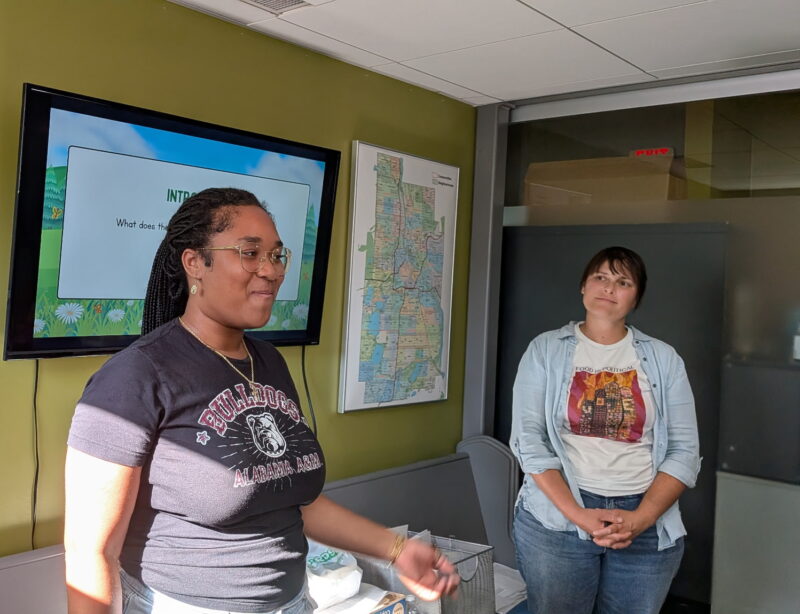
A lot of the young adult service members were from outside Minneapolis, Manny shared, so it was neat to bring them into the city and get them familiar with stormwater management and plant placement.
“I learned a lot during the process about how to be a better project manager,” Manny shared, reflecting that the experience gave him the opportunity to learn how to juggle different pieces of a project and adapt to changing plans.
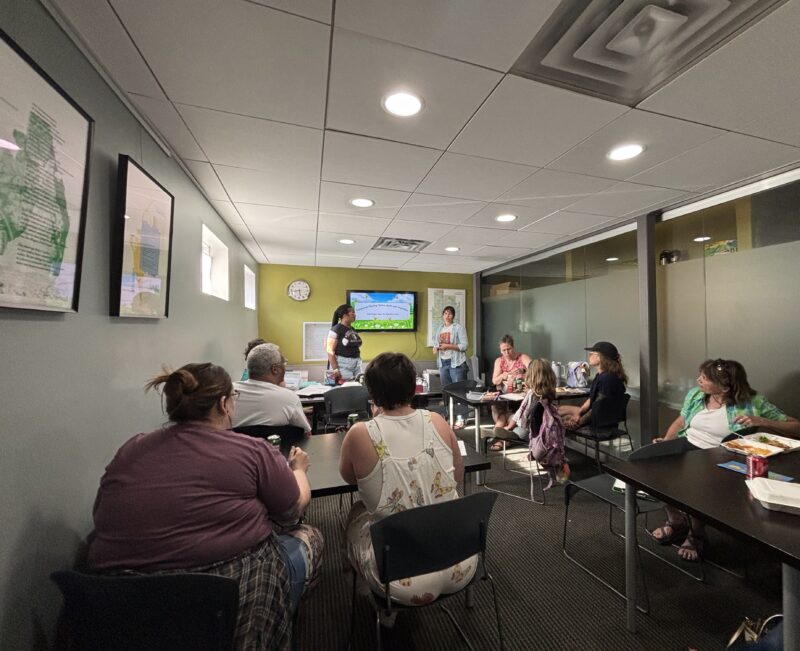
This summer also included a workshop series that Manny and team members developed for the community with topics including soil, companion planting, the Anthropocene, and climate change and water justice. Gloria Iacono, Four Sisters Urban Farm Manager at the Native American Community Development Institute, partnered with us to present the companion planting workshop.
“It was great to have discussions with the homeowners and learn together,” Manny shares. Many of the homeowners didn’t know each other so it was an opportunity to meet and connect with neighbors as well.
Sustained Impacts
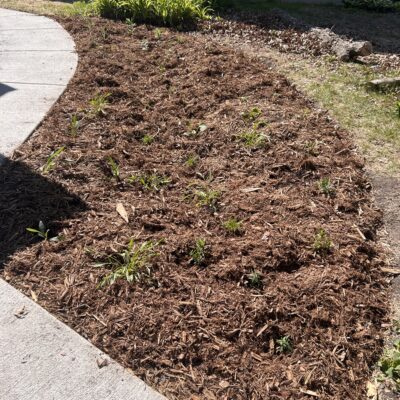 The participating CLCLT homes are located across the Bassett Creek and Mississippi watersheds. The new rain gardens will help improve water quality and reduce runoff in these two highly developed watersheds. With these areas threatened by rising housing costs, CLCLT helps residents stay rooted in their communities, while our partnership aims to make those neighborhoods more livable and thriving.
For Manny and the team, it was important for them to understand and support how each homeowner wanted to transform their outdoor space, and what they wanted it to look and feel like.
Moving forward, the team is planning a workshop focused on garden maintenance for participating CLCLT homeowners and other community members, to equip them with the knowledge and confidence to care for their new plantings for years to come.
— by Megan Reich, Metro Blooms Communications + Education Co-Director