
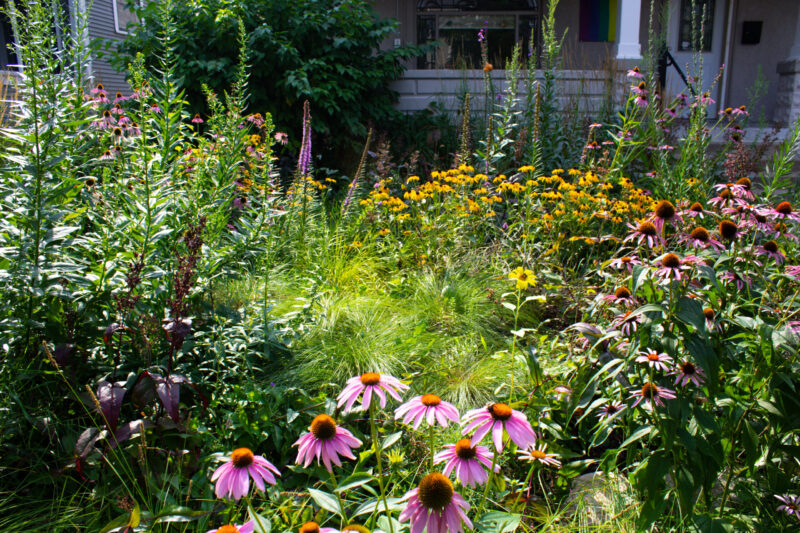
 “Low maintenance” is one of the most common requests our Metro Blooms Design+Build team hears. Many of us want a landscape that is friendlier for the environment while being easier to care for—but what that looks like can vary widely. Does it mean no mowing? Less weeding? Fewer seasonal chores?
When it comes to landscaping with native plants, low maintenance doesn’t mean no maintenance. But with thoughtful design and the right plant choices, it can mean spending less time working in your yard—and more time enjoying it.
What does “low maintenance” really mean?
When our designers begin working with a client, one of the first questions they ask is: “What does low maintenance mean to you?”
For some, it’s eliminating weekly mowing. For others, it’s reducing weeding or simplifying seasonal cleanup. These preferences help guide our design decisions—like reducing turf grass, incorporating more trees and shrubs, or designing densely planted garden beds that naturally suppress weeds.
All landscapes require care. Traditional lawns often demand frequent mowing, fertilizing, watering, and leaf management. Native plantings shift that workload. Instead of weekly mowing, you may be weeding once a month, cutting back plants once or twice a year, and spending time observing how your garden evolves.
It’s not about doing nothing, but it is about doing less, and doing it more intentionally.
Maintenance as landcare
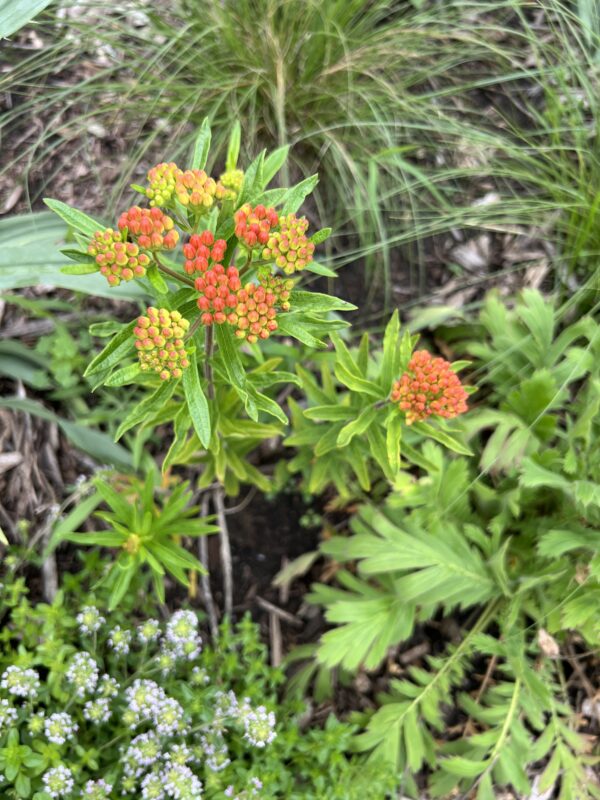
We like to think of this work not just as maintenance, but as landcare.
Maintenance can feel like a list of chores. Landcare reframes those same tasks as a way to engage with your landscape—observing pollinators, noticing seasonal changes, and building a relationship with what’s growing and blooming.
Many clients find that time spent in a native garden feels different. Instead of rushing through a checklist, you’re interacting with a living system. There’s a sense of stewardship and connection that grows over time.
What maintenance looks like in a native landscape
Maintenance in native plantings changes with the seasons and evolves over time. Here’s what you can expect:
Establishment (Years 1–2)
The first couple of years are the most hands-on. This early investment pays off. With proper care up front, your landscape becomes significantly easier to manage in the long term.
- Watering: Even drought-tolerant native plants need consistent watering while they establish roots. Think of them as “babies”—they need support early on to thrive later.
- Weeding: Disturbed soil creates opportunities for weeds. Regular weeding during this phase prevents larger issues down the road.
- Mulching: Mulch helps retain moisture and suppress weeds while plants fill in.
Maturing Landscape (Years 3+)
As plants grow and fill in, maintenance becomes more about editing than upkeep.
- Less mulching: Dense plantings cover the soil, reducing the need for added mulch.
- Occasional weeding: A well-established garden naturally suppresses many weeds.
- Seasonal cutbacks: Many native plants only need to be cut back once a year—keep dead stems standing through the winter and cut back in spring once dandelions start blooming.
Designing for less work
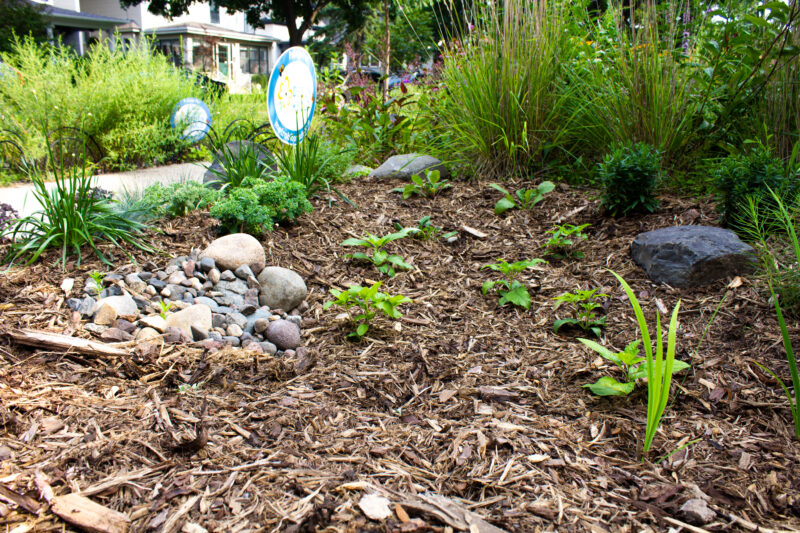 A big part of creating a low maintenance landscape happens at the design stage. Our team uses strategies like:
- Right plant, right place: Matching plants to your soil, sunlight, and moisture conditions ensures better survival and less intervention. For example, clay soils require different plant choices than sandy ones.
- Dense planting: Installing plants close together helps them knit into a living groundcover, reducing space for weeds and minimizing the need for mulch.
- Structural layers: Incorporating shrubs and trees can reduce weeding needs while adding visual interest and habitat.
- Seasonal diversity: Designing for blooms throughout the growing season supports pollinators and reduces the need for replanting.
Sometimes, clients are tempted to “fight” their landscape—replanting species that struggle in a given spot. Instead, our designers encourage observing what thrives and expanding those plantings over time.
Getting to know your garden
A low maintenance landscape reduces workload, but it doesn’t eliminate it. Regular lawn mowing cuts down weeds and volunteer tree seedlings before you even notice them. In a garden bed, those same plants need to be managed by hand. That’s why learning to identify your plants is so important. Understanding what you planted—and what you didn’t—makes weeding faster, easier, and far less overwhelming.
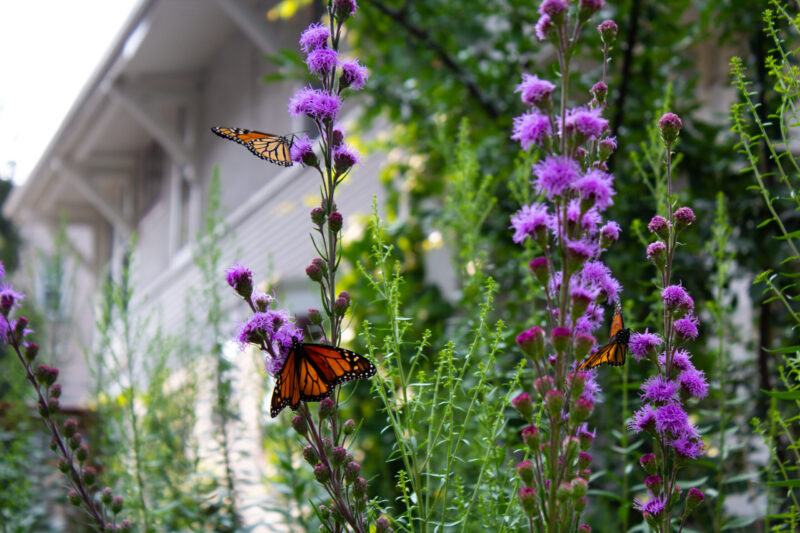 One of the most rewarding aspects of native gardening is watching your landscape change over time. Some plants may spread and fill in quickly. Others may fade out. Part of landcare is observing these patterns and making adjustments—adding species where blooms are missing, or editing plants that become too dominant. Over time, your garden becomes more resilient, more self-sustaining, and more reflective of your site’s unique conditions.